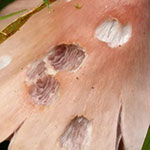
You may know the Pink Waxcap Porpolomopsis calyptriformis by its other common name: ‘the ballerina’. It is classified as ‘vulnerable’ on the IUCN Red List with a decreasing population trend.
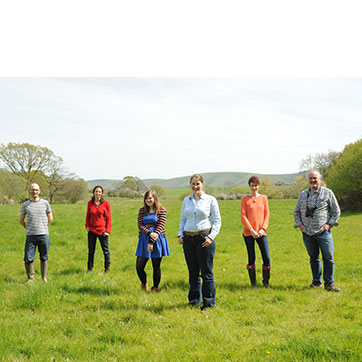
Welcome to the website of the Sussex Biodiversity Record Centre, one of the many local environmental record centres situated around the UK. We provide environmental information services encompassing biodiversity, geodiversity and other aspects of Sussex’s natural capital. We cover the two counties of East and West Sussex, including Brighton & Hove, in South East England. We are a small but dedicated team of environmental data managers, naturalists and IT specialists.
The Sussex Biodiversity Record Centre is managed as a partnership project, hosted by the Sussex Wildlife Trust. Our partners include local planning authorities, government agencies, conservation bodies and other organisations which need access to up-to-date biodiversity information, such as water companies.
Sussex has a vibrant and energetic biological recording community with many independent recording groups and societies. By strengthening relationships with these groups, and the wider network of naturalists, ecologists and recording schemes active in Sussex, the Record Centre facilitates sharing of ever-greater amounts of biodiversity data.
You may know the Pink Waxcap Porpolomopsis calyptriformis by its other common name: ‘the ballerina’. It is classified as ‘vulnerable’ on the IUCN Red List with a decreasing population trend.
12 December 2023
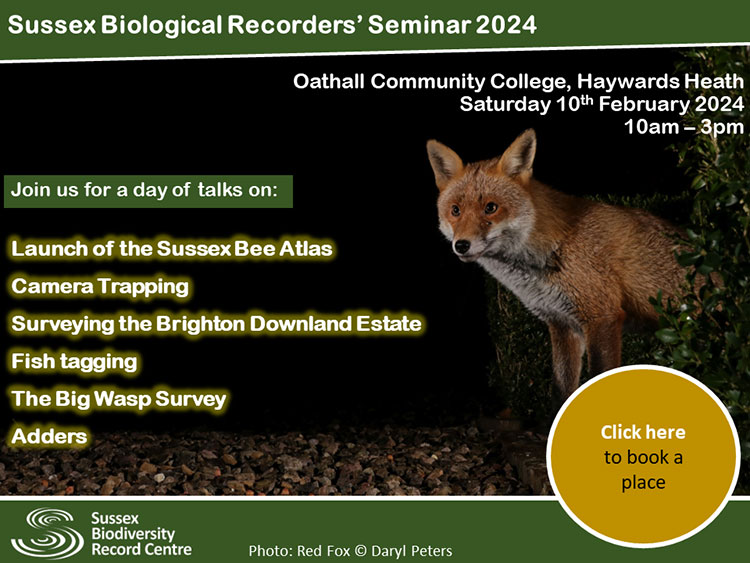
Date: Saturday 10th February 2024
Time: 10am – 3pm (Arrival from 9.30am)
Venue: Oathall Community College, Appledore Gardens, Lindfield, West Sussex, RH16 2AQ
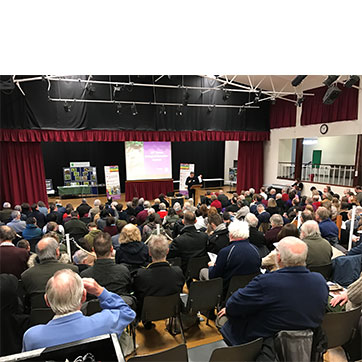
Join Sussex Biodiversity Record Centre on the 10th February 2024 for the 33rd Annual Sussex Biological Recorders’ Seminar, at our usual venue Oathall Community College, Haywards Heath, from 10am to 3pm. The Sussex Biological Recorders’ Seminar provides a unique opportunity to meet other people from Sussex’s wildlife recording groups, natural history societies and local conservation groups.
This year we have a range of talks including Graeme Lyons on surveying the Brighton downland estate, and Dr Sam Kelly on engaging a community with adder conservation. Daryl Peters will share his experiences camera trapping in and around Worthing, and Sussex Wildlife Trust’s Living Seas Officer Sarah Ward on the FISH INTEL project to understand the movements of fish around the Sussex IFCA Nearshaw Trawling Bylaw area (and beyond!). We’re also delighted to have James Power launching his book ‘The Bees of Sussex’ ( don’t forget to pre-order your copy!), and Iona Cunningham-Eurich from the Big Wasp Survey talking about engaging citizen scientists with surveying an undervalued insect group.
This year we are thrilled to offer a vegetarian buffet lunch option from Seven Sisters Spices, or you can bring your own lunch if you prefer. If you have any dietary restrictions or preferences please list these in the ‘food options’ box, or email loismayhew@sussexwt.org.uk so we can make sure these are catered for. Light refreshments will be available.
You are also invited to bring a stand for your organisation or group, as there will be lots of opportunity to socialise and catch-up with fellow recorders. Please book this separately using this form: https://www.cognitoforms.com/SxBRC/DisplayStandBookingForm
Travelling to the venue: There is ample parking on-site. Oathall Community College is a 12 minute walk from Haywards Heath rail station. The nearest bus stop is Summerhill Lane. There is also a covered bike rack for bicycles. If you would like to carshare to the event, we have created an event page where you can add cars or look for car spaces near you here: https://carpoolorganiser.com/event/sussex-biological-recorders-seminar (Please note this service is provided by a third party site.)
Accessibility: There is level access to the hall and an accessible toilet in an adjacent building.
If you have any issues with your booking, or would like more information about the event, please contact sxbrc@sussexwt.org.uk or phone on 01273 497554
We hope to see you there!